
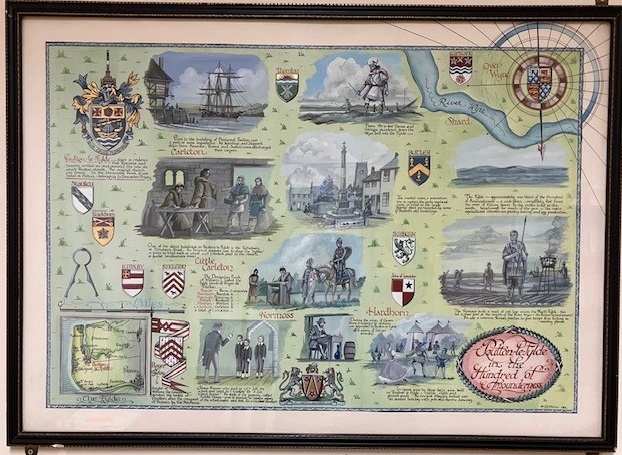
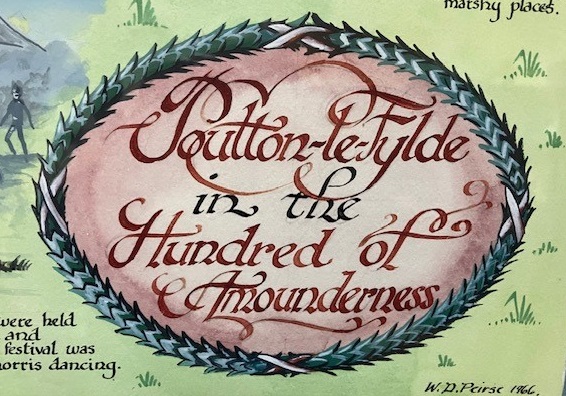
This beautiful print depicts what was once ‘Poulton-le-Fylde in the Hundred of Amounderness’.
The original work was by W. D. Peirse in 1966 and illustrates the local towns and villages of the ‘Hundred’. The work is beautifully detailed and includes the heraldic crest of Sir Poulton-le-Fylde which features its iconic Market Cross and stocks at the top and in the centre a sailing ship to denote its prominence as part of the ‘Ports of Poulton’ at both Wardley’s Creek and Skippool prior to the development of the town of Fleetwood.
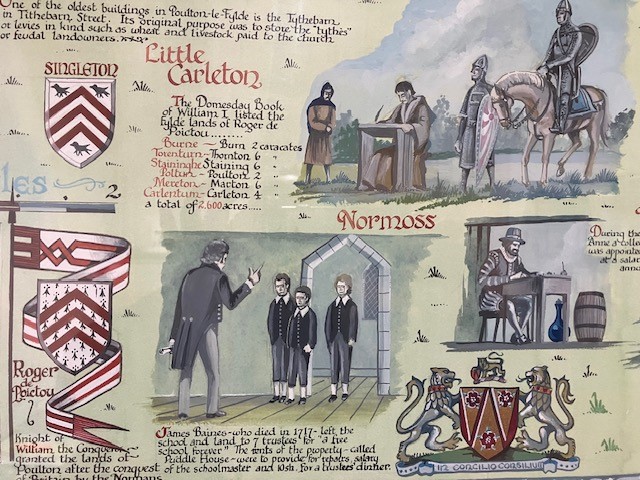
This artwork depicts through text and illustration the historic story of the communities of Poulton-le-Fylde, Carleton, Little Carleton. Normoss and Hardhorn and some of their noble families.
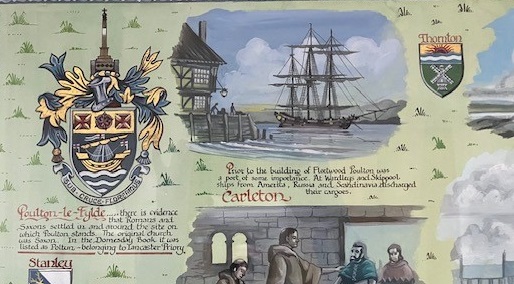
The heraldic crest of Poulton-le-Fylde and a beautiful illustration of ‘The Ports of Poulton’
The Hundred of Amounderness was an ancient administrative division of Lancashire, covering much of what is now the Fylde Coast and surrounding areas, including places such as Fleetwood, Poulton-le-Fylde, Garstang, Thornton, Kirkham, and parts of what is now Blackpool.
A ‘hundred’ was a medieval unit of local government used in England from Anglo-Saxon times. The origin of the name is uncertain, but it may have referred to an area capable of providing 100 fighting men, or a district containing approximately 100 households.
Hundreds were used for:
• Collecting taxes
• Holding local courts
• Organising military service
• Administering justice
By the late nineteenth century, hundreds had largely ceased to have any administrative function.
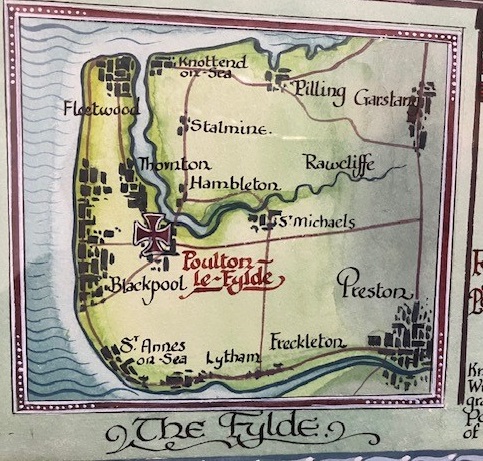
The name Amounderness is of Norse origin, reflecting the significant Viking influence in north-west Lancashire. It is believed to derive from an Old Norse personal name, possibly Agmundr (or a similar name), combined with nes, meaning a headland or promontory. Thus, Amounderness roughly means:
“Agmund’s headland” or “the headland associated with Agmund.”
The area was recorded in the Domesday Book (1086) as Agemundrenesse.
Although the Hundred no longer exists as an administrative area, the term still appears in:
Historic property deeds
Parish and manorial records
Genealogical research
Archaeological and local history studies
See more Historic Deed and Plans from the collection
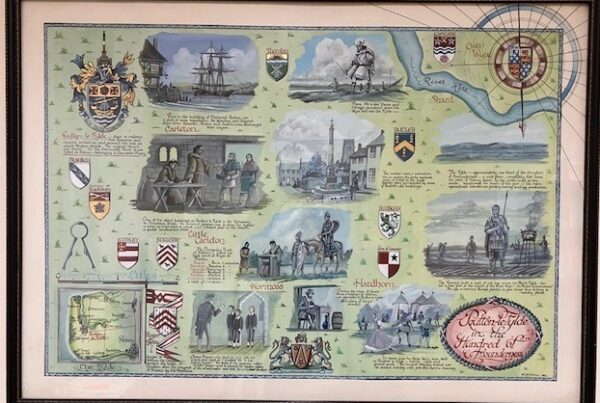
Poulton-le-Fylde in the Hundred of Amounderness
Poulton-le-Fylde in the Hundred of Amounderness
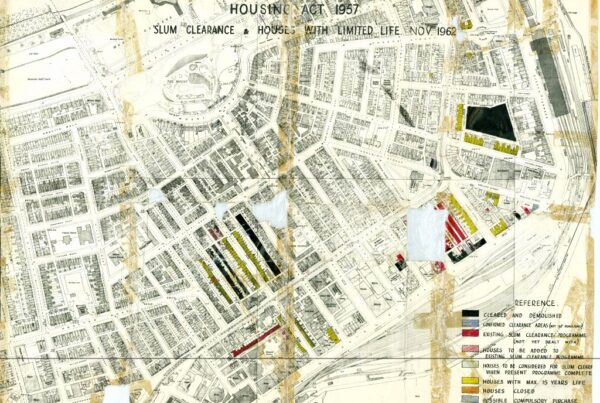
Fleetwood Slum Clearance and Houses with Limited Life Nov 1962
Fleetwood Slum Clearance and Houses with Limited Life Nov 1962
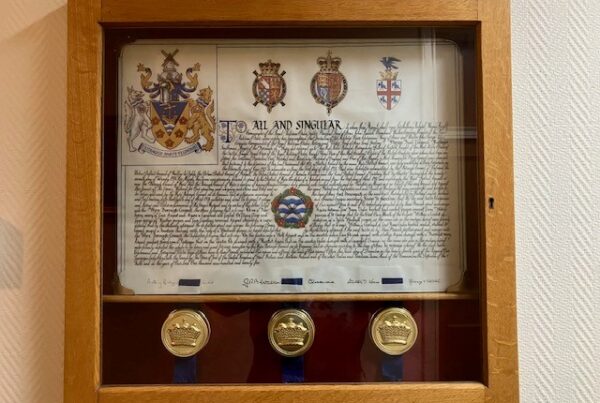
Grant of Arms to the Borough of Wyre 1975
Grant of Arms to the Borough of Wyre 1975
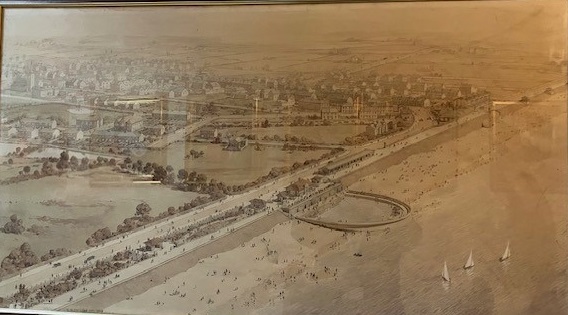
Cleveleys Promenade Proposals 1928
Cleveleys Promenade Proposals 1928
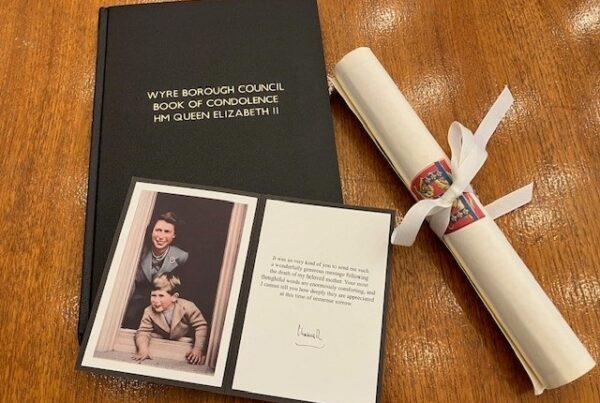
Wyre Borough Council Book of Condolence HM Queen Elizabeth II
Wyre Borough Council Book of Condolence HM Queen Elizabeth II
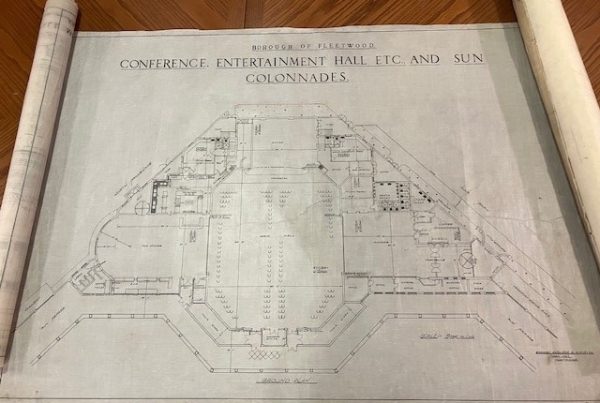
Original Marine Hall, Fleetwood Architectural Drawings
Original Marine Hall, Fleetwood Architectural Drawings
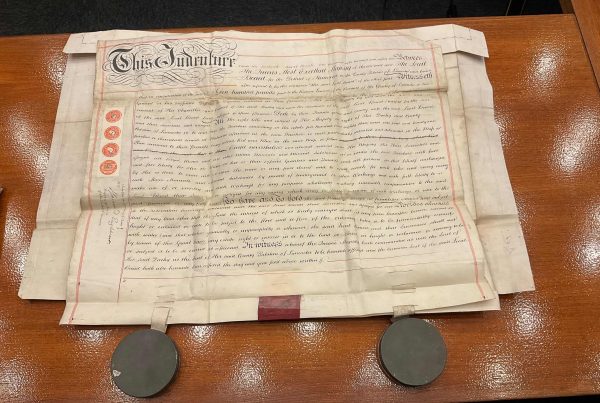
Deed/Indenture Agreement dating to March 1881
Deed/Indenture Agreement dating to March 1881
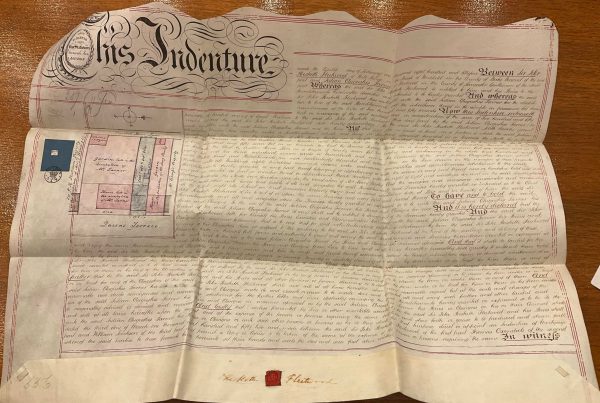
Deed Indenture dating to February 1854
Deed Indenture dating to February 1854
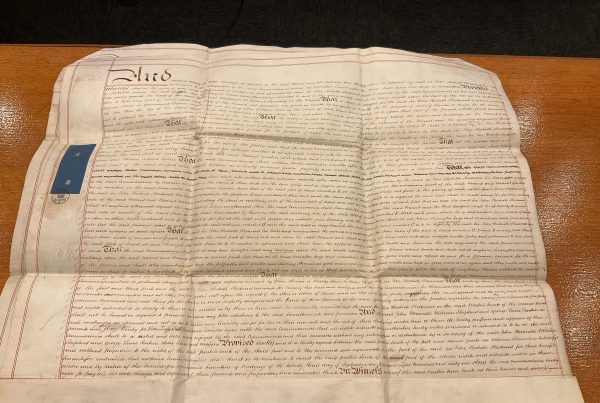
Deed Agreement dating to December 1861
Deed Agreement dating to December 1861
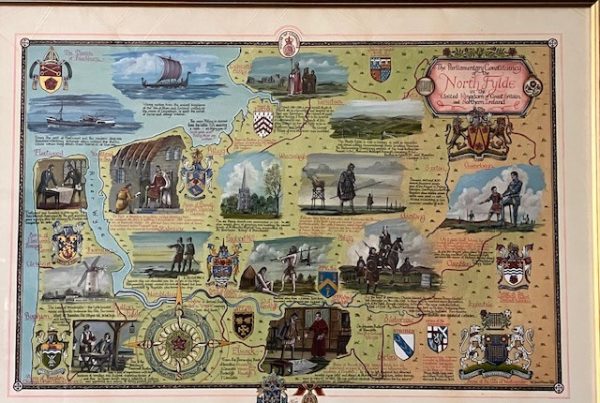
North Fylde Constituency Plan